
Tacoma, WA · Garage Door Service
Garage Door Repair for Lakewood's 1970s Housing Stock
Lakewood homes mostly went up around 1974 - a decade before the area's overall median. We know the extension-spring, single-track doors that era left behind and how to fix them right.
- Repairs & new doors
- Springs & openers
- Serving 4 nearby communities
Parts We Carry
Lakewood's median home dates to 1974, which puts most garage doors here a decade ahead of what you'll find across the wider service area, where the median build year runs closer to 1987. That earlier construction window means a lot of these openings still have the hardware that was standard before torsion springs became the default: extension springs running along the horizontal track, lighter-gauge steel sections with no foam core, and jamb-mounted brackets instead of the reinforced header plates you see on newer builds. We carry extension spring sets in the sizes that match these doors, replacement rollers and hinges sized for lighter panels, and the pulley and cable hardware that extension systems use instead of a drum. We also stock parts for the chain-drive openers that were common on homes from this era - these units tend to run louder and slower than a modern belt drive, but a worn sprocket or stripped gear is usually a part swap, not a reason to replace the whole unit. What we don't carry on the truck is anything custom-width; if a Lakewood door was cut down to fit an odd opening at some point, that panel may need to be special-ordered, and we'll tell you up front if that's the case rather than make you wait at the curb.
The Cost of This Job
We don't post flat prices here because the job itself varies with what's actually broken, and on a door built when Lakewood's housing stock went up, the fix is often simpler and cheaper than it would be on a newer system - extension springs cost less than torsion springs, and a chain-drive opener repair is usually a part, not a board. That said, age cuts both ways. A door that's been running on its original 1970s-era hardware for this long has likely had the spring replaced once or twice already, and if the track itself has started to pit or the cable drums have worn unevenly, you're looking at more than a spring swap. We'll give you the number for your specific door once we've looked at it, not a guess over the phone. One honest limit: if the opener motor itself has failed and it's an older chain-drive unit, replacement parts for some of these get harder to source every year, and at some point a new opener costs less than hunting down a part for one that's 30-plus years old. We'll tell you when that math has tipped, rather than chase a repair that doesn't make sense.
What You Are Seeing
If your door is dragging, slamming the last foot of travel, or the opener strains and reverses before it closes, that's a classic sign of an extension spring that's lost tension - common on doors from Lakewood's 1974-median building stock, where the spring may never have been swapped since the house was built. A door that sits crooked on one side, or where one cable looks loose while the other is taut, usually means a cable has slipped off its pulley or frayed, which on these older setups happens more often because the hardware wasn't built with today's cable gauge. Rattling or grinding when the chain-drive opener runs points to a worn sprocket or a chain that's stretched past its adjustment range. Climate here is mild with occasional freeze risk, so cold snaps aren't usually what's breaking these doors - it's mostly age and cycle count catching up with hardware that's been in service for decades. If your door won't budge at all and the spring looks intact, check whether the opener's safety sensors are misaligned before assuming the worst; that's a five-minute fix, not a parts job.
Getting It Booked In
We run jobs in Lakewood out of our Tacoma shop, about seven miles up the road, so when you call we're scheduling a truck to come to you rather than dispatching from a depot in town. Tell us what you're seeing - which spring type you think you have, whether the opener is chain or belt drive, whether the door is single or double - and we can usually tell you over the phone whether it sounds like a straightforward spring or cable job or something that needs a look before we quote it. Lakewood's roughly 26,125 households sit at a lower median income than the wider service area, and we know that a garage door repair isn't a want, it's a need - we'll always tell you plainly whether a repair makes sense or whether you're better off putting that money toward a new door and opener. We don't maintain a branch location in Lakewood itself, so same-day scheduling depends on the day's route, not a local standby crew.
How We Fix It
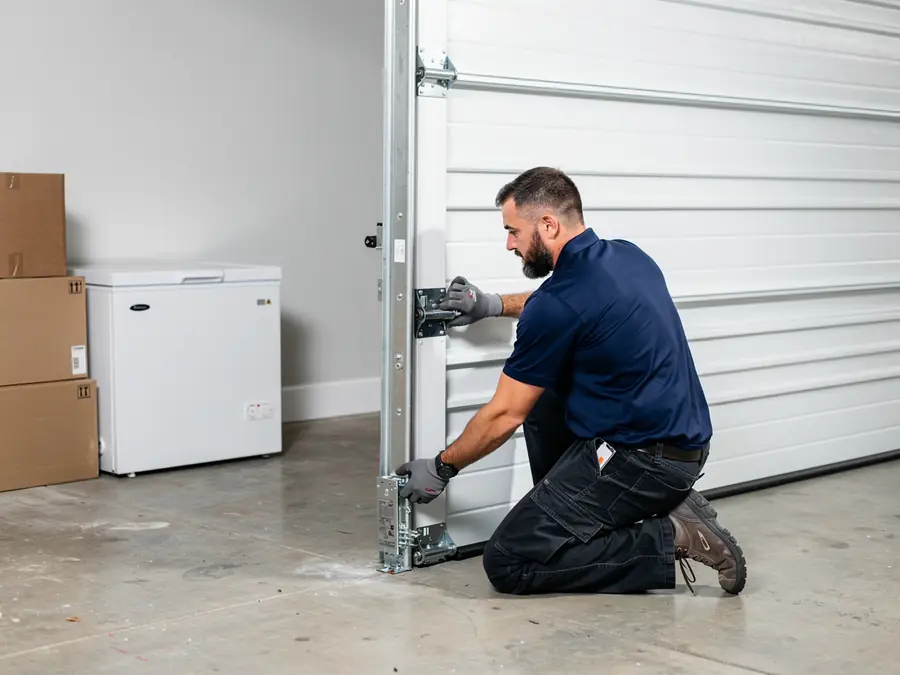
For an extension-spring door, we replace both springs as a pair even if only one has broken - the second one is usually close behind, and running mismatched tension on a door built in the 1970s puts uneven strain on the track. We check the cable drums and pulleys at the same time, since on hardware this age, a frayed cable is often a symptom of a pulley that's worn its groove uneven, not just a cable problem on its own. If the opener is the issue, we test the gear train and sprocket before replacing a board or motor outright - a lot of what looks like opener failure on these older chain-drive units is really a stripped gear that costs far less to fix. Where a door's track has pitted or bent from decades of cycles, we true it up rather than defaulting to a full track swap unless the metal itself is compromised. We finish every job by cycling the door a dozen times and checking balance by hand, which matters more on original hardware than it does on anything newer, since these systems were never built with today's safety reversal standards in mind.
Frequently asked questions
Why does my opener sound so loud compared to newer ones I've heard about?
If your house dates to around when most of Lakewood was built, you likely have a chain-drive opener, which runs louder and has more vibration than the belt-drive units common today. That's not a sign of failure on its own - it's just the technology from that era. If the noise has gotten noticeably worse recently, that usually means a worn sprocket or a chain needing tension adjustment.
Should I replace my extension springs with a torsion system?
You can, but it's a bigger job than a straight spring swap since torsion systems need a different mounting setup above the door. If your current extension springs are doing the job and the track is in good shape, replacing like-for-like is usually the cheaper, faster fix. We'll tell you if your specific door is a good candidate for the upgrade.
Do you have a shop in Lakewood?
No, we run out of Tacoma, about seven miles away, and send a truck out for Lakewood jobs. We don't keep a local branch here, so scheduling depends on the day's route rather than a standby crew based in town.
My door is original to the house - is that a problem?
Not automatically. A lot of doors from Lakewood's building era are still running fine if the spring's been replaced along the way. The bigger question is usually the track and cable hardware, which wears with cycle count regardless of how well the panel itself has held up. We check both before recommending anything.
Book garage door service in Tacoma
Call now or request a quote - tell us what the door is doing and where you are.