
Tacoma, WA · Garage Door Service
Emergency Garage Door Repair for Lakewood's Older Housing Stock
Lakewood's housing stock runs older than the rest of the service area. We explain what that means for a broken spring or stuck opener and what the fix costs.
- Repairs & new doors
- Springs & openers
- Serving 4 nearby communities
Parts We Carry
Lakewood's houses mostly went up around 1974, well ahead of the 1987 median across the rest of the service area. That gap matters on a service call. A door built in the mid-1970s is more likely to run on a one-piece torsion spring with side-mounted hardware than the extension-spring or lighter double-torsion setups common in homes built after 1987. We carry torsion springs in the common residential wind sizes, standard rollers, cables, and openers that fit both eras, because a Lakewood call and a newer-build call around it can need different stock on the same truck. What we don't carry is every obsolete bracket from a door nobody's made in decades - if your track hardware is original to a 1974 build and no longer manufactured, we'll tell you straight that a repair might mean fabricating a mount rather than ordering a part, and that takes longer than a same-day fix.
The Cost of This Job
Lakewood's median household income sits at $70,524, noticeably below the $104,124 median across the wider service area. We don't price by zip code, but we do size the recommendation to the house in front of us. On an older torsion system, a spring replacement is usually the whole job - the track and drum rarely need touching if the door's been maintained. On a newer double-torsion setup elsewhere in the service area, a failed spring sometimes means replacing both springs as a pair, which costs more. We'll tell you which situation you're in before we start, not after. We travel from Tacoma, about 7 miles, and that drive is already worked into how we quote the call - you won't see a separate mileage line for Lakewood.
What You Are Seeing
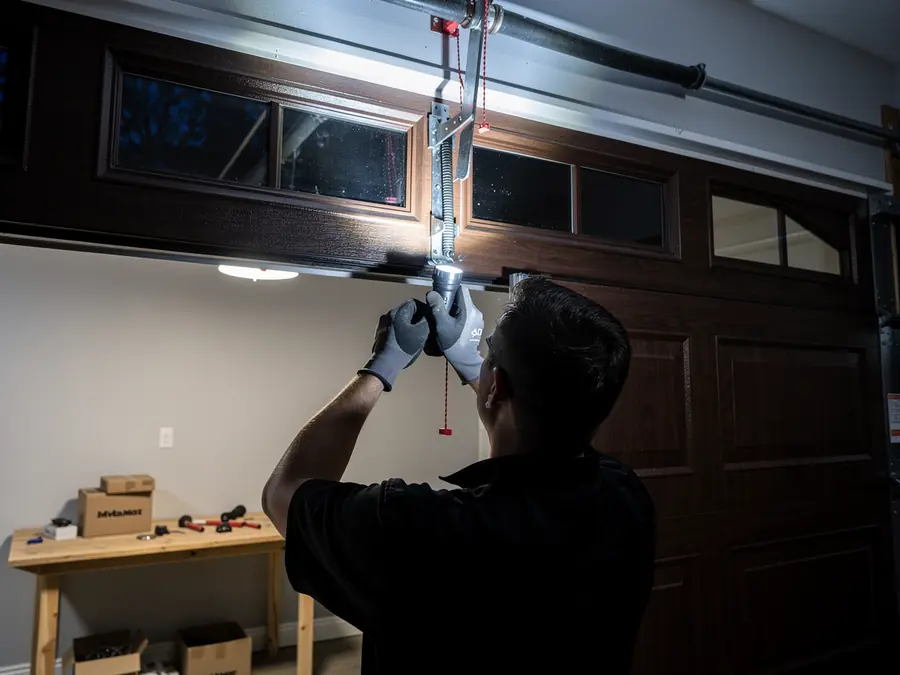
A door that won't lift, or lifts a few inches and stops, almost always means a broken torsion spring - the coiled bar above the door doing the lifting work your arms shouldn't have to. On the 1970s-era doors common here, that spring is often original or a long-past replacement, and the cable guards and end bearing plates wear along with it. If the door opens but grinds, shudders, or drops unevenly on one side, that's usually a roller that's outlived its nylon or a cable starting to fray at the drum. The region's climate runs mild with occasional freezes, which isn't severe enough to crack steel outright, but older nylon rollers that have sat through forty-plus winters do go brittle and chip. None of this is an emergency in the sense of danger to the house - it's an emergency in the sense that a two-car household with one working door loses half its parking overnight.
Getting It Booked In
We come from Tacoma, so there's no local branch or depot in Lakewood - the truck is dispatched from the shop and drives the 7 miles out. When you call, tell us the age of the house if you know it; a door built close to 1974 points us toward torsion hardware and bearing plates that newer stock around the service area doesn't use, and it changes what we load before we leave. We don't promise a specific arrival window here since that's a Tacoma-page commitment, not a Lakewood one - what we can tell you is that distance from Tacoma doesn't add a surcharge, and we'll confirm parts availability on the call so you're not waiting on us to discover mid-job that a bracket needs sourcing.
How We Fix It
On a torsion spring job, we unwind and remove the broken spring under control, check the drums, cable, and bearing plates for wear consistent with the door's age, and set a new spring matched to the door's weight and wind. On a 1974-era door that's never had the bearing plates replaced, we'll often swap those at the same time since labor is already there and a worn plate is what eats the next spring early. For a roller or cable issue we replace in kind rather than upsell a full opener if the opener itself is fine - across 26,125 households in Lakewood, most of these jobs are a single-system repair, not a full door replacement. If the door is original to the house and the track has rusted or bent beyond straightening, we'll say so and quote replacement instead of patching something that'll fail again in a season.
Frequently asked questions
Is my door too old to repair?
Not usually. A door built around 1974 can run fine for decades with the right spring and roller maintenance - age alone isn't a reason to replace. We only recommend replacement when the track or panel itself is damaged beyond a straight fix, which is a separate call from a broken spring.
Do you have a shop in Lakewood?
No. We run out of Tacoma, about 7 miles away, and dispatch the truck to Lakewood for every call. There's no separate branch here, so the drive is already factored into how the job is scheduled and quoted.
Why does my spring keep breaking?
On older torsion systems, a worn bearing plate or a cable drum that's slightly out of alignment puts extra load on the spring every cycle, which shortens its life. If this is the second spring in a few years, we'll check the hardware around it, not just swap the spring again.
Can you match the hardware on a house this old?
Most of the time, yes - standard torsion springs and rollers fit most residential doors from this era. Occasionally a bracket or mount is specific to a door no longer made, and in that case we'll tell you it needs fabricating rather than ordering, which takes longer.
Book garage door service in Tacoma
Call now or request a quote - tell us what the door is doing and where you are.