
Tacoma, WA · Garage Door Service
Why So Many Tacoma Garage Doors Were Never Built to Hold Heat
Most Tacoma garage doors date to the 1962-2003 building boom, before insulation standards caught up. Here's what that means for your panel, track, and opener.
- Repairs & new doors
- Springs & openers
- Serving 4 nearby communities
Leaving It Alone
If your door still opens and closes square, you don't need to touch it just because it's old. A lot of the doors we look at across Tacoma went up between 1962 and 2003, with the median build year sitting around 1987. That's a window when steel doors were common but insulation wasn't part of the spec sheet the way it is now. A single-layer steel panel from that era can work fine mechanically for decades. The spring, track, and rollers don't care what year the door was made. What they care about is whether anyone's lubricated them in the last five years.
We're not going to tell you to replace a door that still runs smooth just because the panel is thin. If the opener still lifts it without straining, the cables aren't frayed, and the bottom seal still touches the slab, leave it. The honest version of our job is telling a homeowner their door has another ten years in it, not finding a reason to sell a new one. Where it gets expensive is when people confuse "old" with "broken" and start replacing hardware that was never the problem in the first place. Check the simple stuff before you call anyone, including us: tighten loose roller brackets, test the auto-reverse, and look at the bottom seal for gaps.
How Local Conditions Play In
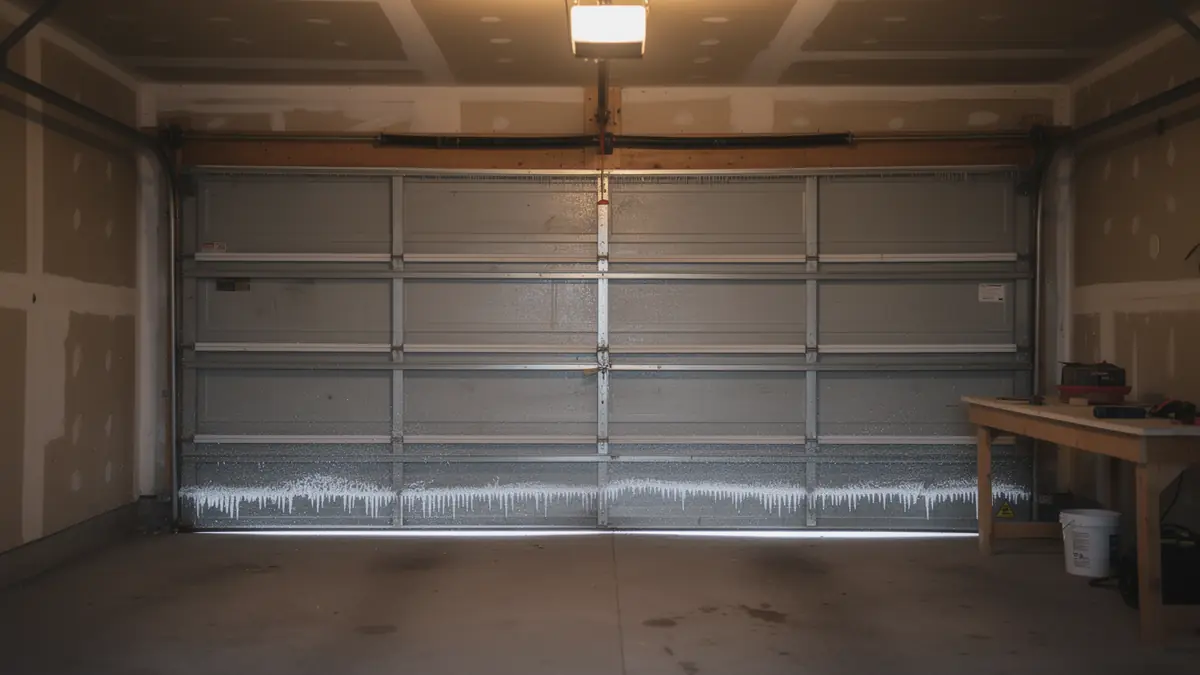
Tacoma sits in a mild climate band with occasional freeze - not the deep-freeze cycling that cracks seals in one winter, but enough cold mornings combined with damp air that an uninsulated steel panel sweats on the inside. On a single-layer door from the 1962-2003 stock, that moisture sits against bare steel with no thermal break, and over years it shows up as rust blooming along the bottom panel seam before anything else fails.
This is different from what you'd worry about in a place with hard freezes - we're not dealing with ice splitting a track. We're dealing with condensation cycling on a door that was built when nobody speced a thermal break because the energy code didn't ask for one yet. If your garage shares a wall with living space, that uninsulated panel is also doing nothing to stop the cold damp air from pulling heat out of the house side of the wall. It's not a safety issue. It's a slow one - rust at the bottom corners, a seal that hardens faster than it should, hinges that pit before the rest of the door shows its age.
Where People Go Wrong
The mistake we see most is someone adding a foam insulation kit to a door that's already dealing with sag or a bent track, thinking insulation will fix a performance problem. It won't. Insulation changes how the panel handles heat and sweat - it does nothing for a spring that's lost tension or rollers that are grinding in a bent track. Across the 42 named areas we cover, from the Hilltop and New Tacoma side through South Tacoma and out toward Lakewood and Parkland, the housing stock runs mostly 1980s-90s construction, and that generation of door is where this confusion shows up most: owners add weight to the panel with a retrofit kit without checking whether the original spring was sized for it.
The other common error is assuming every door from this era needs the same fix. A house near Fircrest built in the early 1960s and a house in Summit built in the late 1990s can both carry a door that looks identical from the driveway, but the opener, the spring wind, and the track hardware underneath can be a generation apart. Match the fix to what's actually on the door, not to the decade on the permit.
The Situation
With 126,830 owner-occupied houses across this service area out of 264,907 households, and a median household income of $104,124, there's a real mix here - people who'll pay for a full insulated replacement and people who'd rather keep a working 1987 door running another decade with a new seal and a spring adjustment. Both are reasonable calls. The door doesn't know what's in your bank account; it just knows whether the hardware is sized right.
If you're deciding between repair and replacement on an older panel, the question isn't age, it's condition: does the track run true, does the spring still hold the door at half-open without the opener straining, and is the bottom seal doing its job. If those three hold up, you're not buying a new door - you're buying a new seal and maybe a lube job. If the panel's rusted through at the bottom or the track's bent past adjustment, that's a different conversation, and we'll tell you straight which one you're in.
Frequently asked questions
Is my garage door too old to insulate?
No - a steel panel from the 1962-2003 era can usually take a retrofit foam kit, but check the spring first. Adding insulation adds weight, and a spring sized for an uninsulated panel can end up undersized once you've bulked up the door. Get the spring tension checked before or right after you insulate.
Why is there rust on the bottom of my door but nowhere else?
That's the condensation pattern typical of uninsulated steel in Tacoma's mild, occasionally-freezing climate. Moisture collects low on the panel and along the bottom seam. It's cosmetic at first, but it accelerates once the paint breaks down there, so a bad bottom seal is worth fixing early.
Does my 1980s house need a different door than a newer house?
Not necessarily. Most of the area's housing dates to 1962-2003 with a median around 1987, and a lot of that stock shares similar opener and track specs. The difference that matters is condition, not decade - a well-maintained 1987 door can outlast a neglected 2003 one.
Should I just replace an old uninsulated door instead of fixing it?
Depends on what's actually wrong. If the track runs true and the spring holds tension, a seal and insulation retrofit gets you most of the benefit for a fraction of the cost. We'll tell you if the panel or track is too far gone to make repair worth it - that's not always the cheaper answer, but it's the honest one.
Related garage door services in Tacoma
More garage door guides
Book garage door service in Tacoma
Call now or request a quote - tell us what the door is doing and where you are.