
Tacoma, WA · Garage Door Service
Emergency Garage Door Repair, University Place
University Place homes run older than the Tacoma-area median, which changes what breaks and what it costs. We cover the call from Tacoma, 5 miles out.
- Repairs & new doors
- Springs & openers
- Serving 4 nearby communities
What You Are Seeing
University Place sits at a median household income of $94,952, below the $104,124 median across the wider Tacoma service area. That gap matters more than it sounds like it should, because it sets where the repair-or-replace line falls on a broken door. At this income level, most owners want the spring fixed, the cable replaced, or the opener repaired - not a new door sold to them on an emergency call.
The houses here also skew older than the regional stock. Median year built in University Place is 1980, while the broader service area runs 1962 to 2003 with a median around 1987. That seven-year gap puts a lot of University Place garage doors into an earlier hardware generation: torsion springs sized for heavier, single-layer steel panels, and openers from before today's safety-reversal standards became common. When one of those springs snaps or a cable frays, it's usually the original gear finally giving out, not a fluke.
If your door won't open, won't close, or dropped suddenly with a loud bang, that's almost always a broken spring or a snapped cable - not the opener, even though the opener is what people blame first.
How We Fix It
We come from Tacoma, 5 miles out, so there's no local branch to call - the truck is dispatched from Tacoma for every University Place job. On arrival, we check the spring tension and cable condition first, since those fail more than anything else on doors from this era. A broken torsion spring gets replaced in pairs when the door has two, because a single new spring paired with an old one wears unevenly and fails again within months.
For doors with original steel track and rollers from a 1970s-80s build, we check for the mismatch that shows up a lot in that hardware generation: track that's slightly bent or rollers that have worn oval, making the door bind even after the spring is fixed. We don't replace parts that aren't the problem. If the opener is sound and the only fault is the spring or cable, that's all that gets swapped.
One limitation worth saying plainly: if your opener is the chain-drive model that often came with houses built around 1980, replacement parts for that specific unit aren't always on the truck. Some of those jobs need a parts order, which means a return visit rather than a same-day fix.
The Cost of This Job
At a median household income of $94,952 in University Place, a full door replacement is a bigger decision than a spring or cable repair, and for most of the doors we see here, it isn't necessary. A broken torsion spring, a snapped cable, or a worn roller set is a repair job, not a replacement job, even on a door that's been running since 1980.
We don't have a posted price list for this page, and quoting a number without seeing the door would be a guess, not a fact. What we can say is that the decision point is usually the opener, not the door panels themselves - steel panels from this era tend to outlast the hardware that moves them. If the springs, cables, and rollers are sound and only the opener has failed, repair almost always makes more sense than replacement at this income level.
Where replacement does make sense: if the door itself is rusted through at the bottom panel or the track is bent beyond straightening, patching it is just delaying the same call.
Why This Fails Locally
University Place's housing stock, with a median build year of 1980, falls on the early end of the broader 1962-2003 range across the service area. Doors from that period were built for torsion springs sized to older, heavier panel steel - and after four decades of daily cycles, those springs are past the point where failure is a surprise. It's wear, not bad luck.
The region's climate is mild with occasional freeze (per the regional climate band), which is gentler on garage door hardware than a harsh winter climate would be - but it doesn't stop metal fatigue. A spring that's cycled a garage door twice a day since 1980 is going to fail eventually regardless of weather, and houses built in that window are now reaching the age where that happens in clusters.
The other factor is household count: 13,803 households in University Place is a fraction of the 126,830 owner-occupied houses across the full service area, and a smaller base means fewer repeat local patterns to draw on - we fix what the door in front of us needs, not what a typical House on a typical street needs.
Doing It Yourself
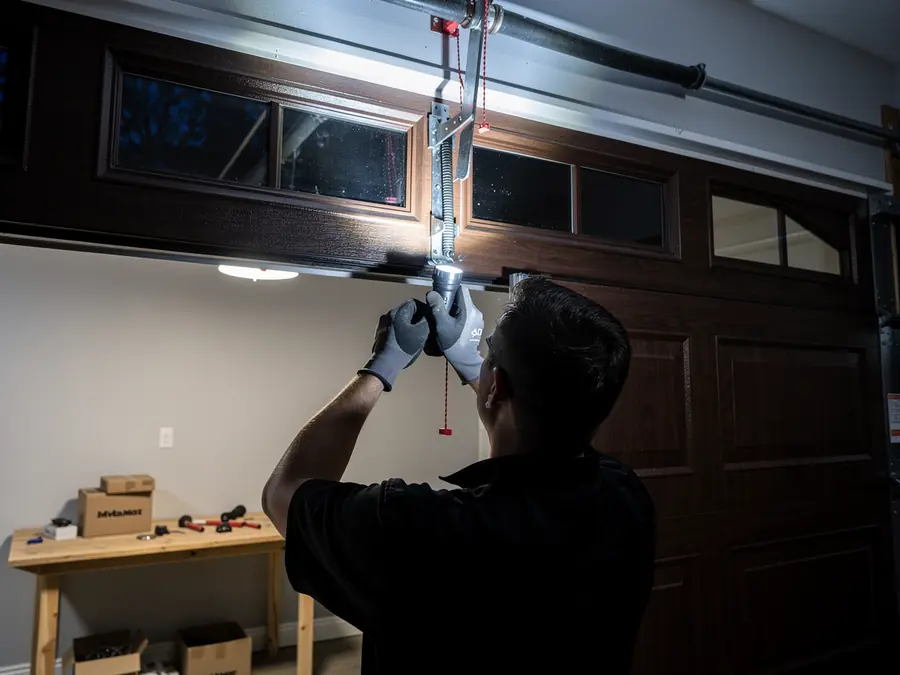
A broken torsion spring is not a DIY repair. These springs are wound under heavy tension, and releasing that tension with the wrong tools is how people end up in the emergency room, not just with a half-finished job. If the spring has already broken, the door is safe to leave alone until a tech arrives - the danger is in the spring that hasn't broken yet but is being worked on by someone without the winding bars and clamps for it.
What you can safely check yourself: make sure the opener isn't simply unplugged or the breaker isn't tripped, since that's a common false alarm that looks like a bigger fault. You can also visually check whether the cable is still wound evenly on the drum, or if it's frayed and starting to separate - if it is, don't run the opener again until it's replaced.
For a door built around 1980, the hardware is old enough that even a roller swap can reveal a bent track underneath, and that's not a job to diagnose with a flashlight and a ladder. Call it in once you've ruled out the obvious.
Getting It Booked In
We dispatch from Tacoma to University Place for emergency calls - there's no local branch here, so every job travels the 5 miles from Tacoma. When you call, tell us whether the door won't move at all, dropped suddenly, or is making noise but still working; that tells us what's likely broken before the truck leaves.
If your garage door hasn't been serviced since the house was built around 1980, mention that too. It changes what we bring: springs sized for older steel panels, and the tools for opener models that aren't common on newer installs.
You can see more about how we cover University Place and the surrounding area, or read about our broader emergency repair coverage from Tacoma, through the links below.
Frequently asked questions
Do you have a branch in University Place?
No. We run out of Tacoma and cover University Place from there, about 5 miles out. There's no local depot or storefront here - every call is dispatched from the Tacoma location.
Is my broken spring normal for a house built in 1980?
Yes. University Place's median build year is 1980, which puts a lot of local doors into the generation where torsion springs are now reaching end of life from decades of daily cycling. A snapped spring on a house that age is wear, not a defect.
Should I replace the whole door or just fix the spring?
For most University Place homes, repair makes more sense than replacement - the median household income here is $94,952, and a spring or cable job costs far less than a full door. Replacement only makes sense if the panels are rusted through or the track is bent beyond straightening.
Can I release the spring tension myself?
No. Torsion springs are wound under heavy load, and releasing that tension without winding bars and a clamp is how people get seriously hurt. If a spring is already broken, leave the door alone and call it in rather than trying to free it yourself.
More garage door services in University Place
- Garage Door Cable Repair in University Place
- Garage Door Repair in University Place
- Garage Door Service in University Place
- Garage Door Maintenance in University Place
- New Garage Door Installation in University Place
- Off-Track Garage Door Repair in University Place
- Garage Door Spring Repair in University Place
Book garage door service in Tacoma
Call now or request a quote - tell us what the door is doing and where you are.