
Tacoma, WA · Garage Door Service
Garage Door Service for Parkland Homes
Parkland homes mostly date to 1980, with 14,256 households spread across the area. We travel from Tacoma for spring, opener, and track repairs built for this stock.
- Repairs & new doors
- Springs & openers
- Serving 4 nearby communities
Time on the Job
Parkland runs about 14,256 households, which puts it on the smaller side next to the rest of the service area's 264,907. That size matters for the kind of calls that come up here: fewer brand-new builds throwing warranty issues, more houses hitting the age where original hardware finally gives out. The median home in Parkland went up around 1980, a few years ahead of the broader area's 1987 median. That seven-year gap sounds small until you're standing in front of the door. A 1980 door is more likely to still have its first opener, or a second one bought in the early 2000s when the first chain drive stripped out. We see a steady run of extension-spring setups from this era rather than the torsion conversions that showed up on later builds. Working on these takes different hardware on the truck, not just a different setting on the same part.
Getting It Booked In
We're based in Tacoma, about 8 miles out, and we run jobs out to Parkland on the same trucks that cover the rest of the area. There's no branch office here and we don't pretend otherwise - what you get is a crew that knows this stretch of 1980s-era stock because it's a regular part of the route, not a one-off trip. Call, tell us what the door's doing (or not doing), and we'll get a time scheduled. If the opener is from the original install, say so when you call - it changes what we bring.
Why This Fails Locally
A door built around 1980 was engineered for the openers and spring tension standard at the time, and a lot of those original setups are still bolted in. Extension springs from that generation stretch and lose tension gradually rather than snapping clean, so the door gets heavier to lift by hand for months before anyone calls - most owners blame the opener first. The region sits in a mild climate with occasional freeze, which isn't brutal, but a freeze-thaw cycle on steel that's already fatigued from 40-plus years of cycling is what finally cracks a worn spring coil or seizes a rusted roller. It's not one dramatic failure - it's age plus a cold snap finishing the job.
What You Are Seeing
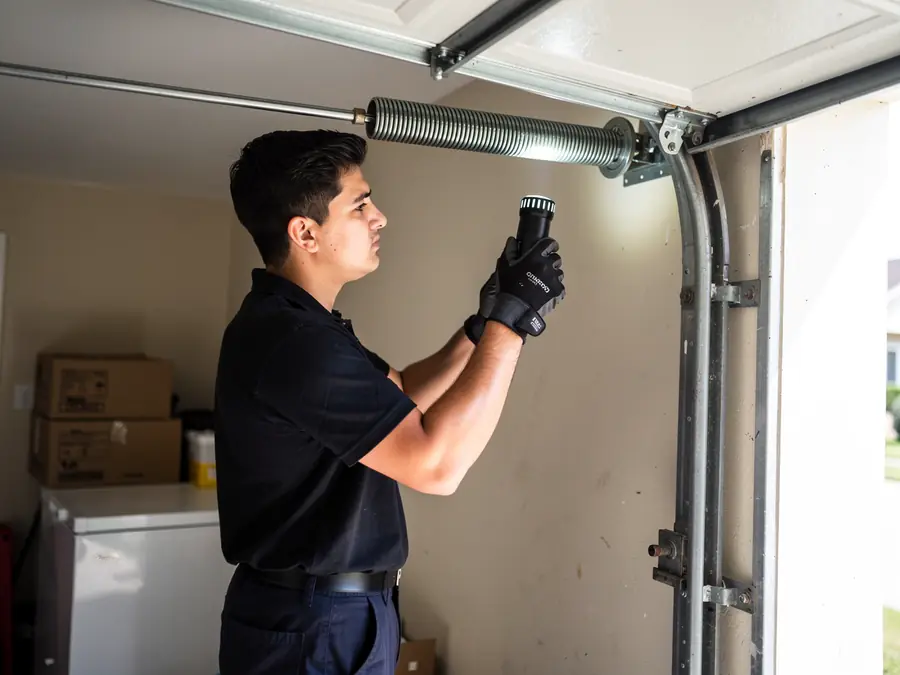
If your door is slow to close, drops the last foot with a thud, or the opener strains and reverses partway up, that's usually spring tension that's drifted out of range on an older extension-spring system - common on Parkland's 1980-era houses. A door that's gone quiet and heavy, with no spring noise at all, often means the spring already let go and the opener's been doing all the lifting, which burns out the motor faster than people expect. Grinding or popping on the way up points to worn rollers in the track, more common the longer a door's run on its original hardware without a roller swap.
Doing It Yourself
Lubricating rollers, hinges, and the track with a light garage-door lubricant is fine to do yourself and it's cheap insurance on an older door. Tightening the visible bolts on the track brackets is reasonable too, as long as the door is down and the opener is unplugged. What's not a DIY job is anything touching the springs - extension or torsion, old or new. A spring under tension can put you in the hospital, and on a 1980-era extension-spring setup, the safety cables that are supposed to catch a broken spring are often missing or degraded, which is a bigger risk than the spring itself. If the door's household income and age of the housing stock in this area tell us anything, it's that these are solid, modest homes meant to last - worth a proper repair, not a shortcut.
Frequently asked questions
Why does my Parkland garage door feel heavier to lift than it used to?
On a house from around 1980, that's almost always a spring losing tension gradually rather than snapping outright. Extension springs common in that era stretch over decades of cycling, and the opener compensates until it can't anymore. It's worth having the tension checked before the opener motor takes the strain and fails too.
Do you have a shop in Parkland?
No. We run out of Tacoma, about 8 miles away, and cover Parkland as part of the regular route. There's no local branch, just trucks scheduled out to the address when you call.
Is it normal for an original 1980s opener to still be running?
It happens, but it's rare for it to be running well. Chain-drive openers from that period were built with shorter service lives in mind than what's sold today, and parts for the oldest units are getting hard to source. If yours is original, a repair call is also a good time to ask what replacement would involve.
Does the mild climate here mean less wear on garage doors?
It helps, since there's no heavy freeze-thaw cycle most years. But the area does get occasional freezes, and on a door with fatigued hardware from decades of use, even a mild cold snap can be what finally cracks a weak spring coil or seizes a rusted roller.
Book garage door service in Tacoma
Call now or request a quote - tell us what the door is doing and where you are.