
Tacoma, WA · Garage Door Service
Why a Door Goes Off Track, House by House in Tacoma
Most Tacoma garage doors date to the 1962-2003 building boom. Here's why those tracks bend, bind, or jump the roller, and when leaving it alone is the wrong call.
- Repairs & new doors
- Springs & openers
- Serving 4 nearby communities
Leaving It Alone
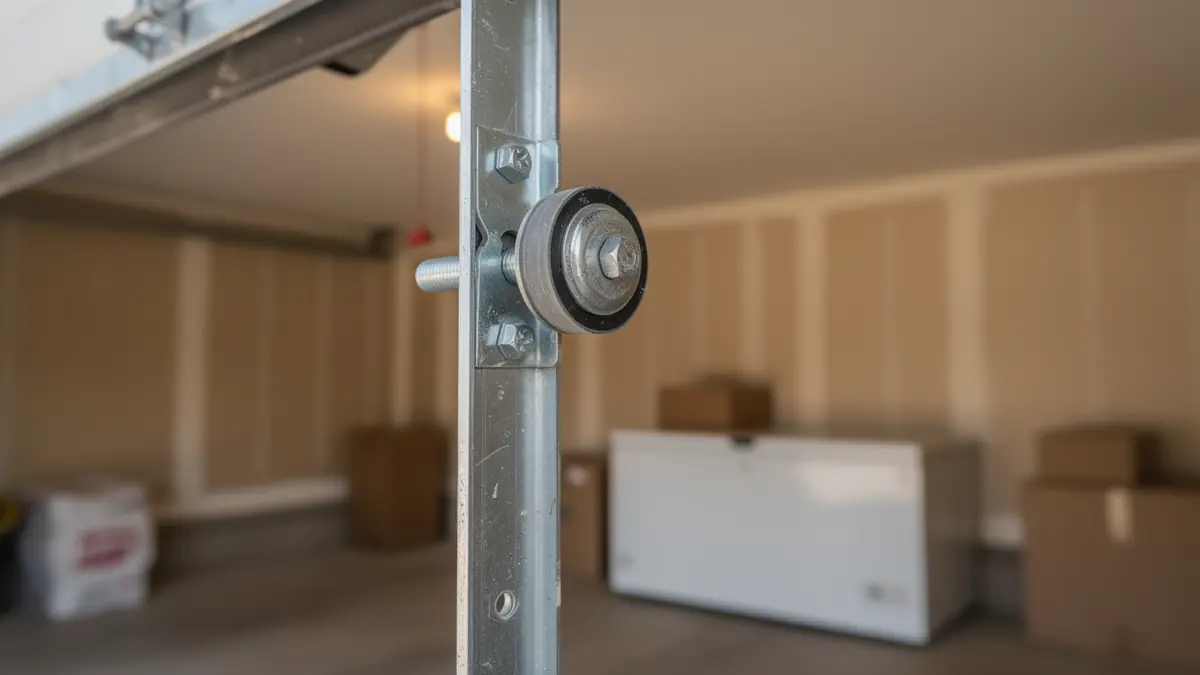
A door that's slightly off track still looks like it's working. It opens, it closes, maybe it scrapes a little or hesitates an inch before the top. That's the moment most people in Hilltop or South Tacoma decide it can wait until next month. It can't, not for long. Once a roller has climbed out of the track channel even a little, the door is riding on bent metal or a misaligned bracket, and every cycle after that makes the bend worse. The cable can jump its drum. On a door with a torsion spring overhead, an off-track panel puts uneven load on the spring itself, and a spring that fails under that kind of stress doesn't fail quietly. We'll say the honest part up front: if you catch it early, straightening a track and resetting rollers is often a 20-minute fix. If you keep running the opener against a door that's already binding, you turn a track job into a track-plus-spring-plus-panel job. The house doesn't care how old it is. The door does.
How Local Conditions Play In
Tacoma sits in a mild climate band with occasional freeze, not the deep-freeze cycle that cracks concrete or seizes hardware solid. That's good news for springs and openers, but it doesn't spare the track. Mild, damp winters followed by the occasional overnight freeze mean condensation forms on steel track rail and door hardware more often than it dries off completely. Over the decades that shows up as surface rust at the track bolts and the horizontal-to-vertical curve, the weakest point in any track run. A track that's rusted at the bend doesn't bend further under impact, it stays slightly deformed, and a roller riding a deformed curve works its way out over time. This is a slow failure, not a storm-driven one. Nobody in this area loses a door to a hard freeze cracking a panel the way they might in a colder climate. What we see instead is years of minor corrosion at the hardware, unnoticed until the door starts walking sideways on one side during the open cycle.
Where People Go Wrong
Most of the housing stock on this side of the state went up between 1962 and 2003, with the bulk of it dating to the 1980s and 90s across the named neighborhoods and nearby cities, from Fircrest to Parkland to Lakewood. That means a lot of garage doors still running original or first-replacement track hardware from that era, sized and bent for a door and opener combination nobody sells anymore. The common mistake: someone notices the door is noisy or slightly crooked and tightens the track bracket themselves, pulling it back toward true by eye. That changes the track's plumb line just enough to create a new binding point a few inches away. Another common one - a bent track from a car bumper tap gets hammered straight instead of replaced, and the repair holds for a few weeks before the metal fatigues again at the same spot. We don't recommend straightening track steel that's already failed once. Track is cheap compared to a spring or a panel, and once it's bent it's already weaker everywhere along that curve, not just at the kink you can see.
The Situation
If your door is from a house built in the 1962-2003 window, which covers most of the service area, the two most common root causes of an off-track door are a rusted or bent track bracket and a roller that's worn enough to ride loose in its own channel. Neither one announces itself with a bang. You'll hear a rub, see a gap at the weatherstrip on one side, or notice the door needs a push partway through its cycle. Catching it at that stage is a straightforward call. Waiting until the door jumps the track completely, usually during an opener cycle under spring tension, turns a simple adjustment into a repair involving a bent panel or a replaced section of track. We service the Tacoma area and the surrounding cities and neighborhoods out to about 15 miles. If you're hearing a new noise from the garage, that's worth a call before it's an off-track door at 10pm.
Frequently asked questions
My door looks crooked but still opens and closes. Is that actually a track problem?
Likely yes. A door that opens but tracks unevenly, with more gap on one side than the other, usually means a roller has partly left the channel or a bracket has shifted. It's one of the more common calls we get from houses built in the 1980s and 90s stock common across this area, where original track hardware is still in place.
Does Tacoma's weather actually cause track problems?
Indirectly, yes. We don't get hard winters, but the mild, damp conditions with occasional freeze mean condensation sits on track rail and hardware more than in a drier climate. Over years that becomes surface rust at the bolts and curve, which is the weak point where tracks bend and rollers start to walk out of the channel.
Can I just bend the track back myself?
You can, but we don't recommend it. Track steel that's already bent once is weaker along that whole curve, even after you straighten it by eye. It usually fails again at the same spot within weeks. Replacing the section is cheap compared to the spring or panel damage that follows a second failure.
How do I know if it's a track issue versus a spring issue?
A track issue usually shows up as a visible gap, a rubbing noise, or the door catching partway through its cycle on one side. A spring issue tends to show up as the door feeling heavy, not closing all the way, or the opener straining. The two often get blamed on each other, so it's worth having both checked at once.
Related garage door services in Tacoma
More garage door guides
Book garage door service in Tacoma
Call now or request a quote - tell us what the door is doing and where you are.